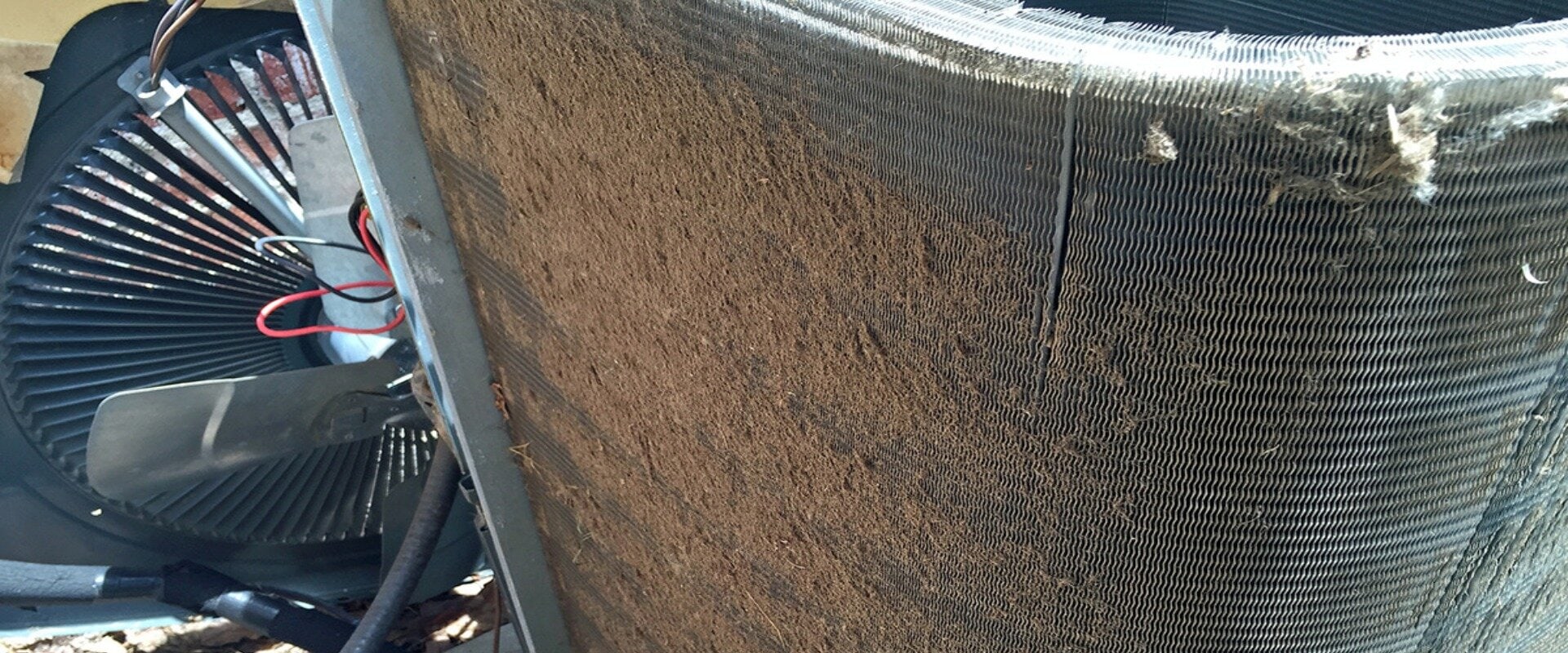
If you’re in Longwood and your AC suddenly feels “off”—the air isn’t as cold, the house cools slower, or everything feels a little clammy—my first suspicion isn’t always the thermostat. In many homes, the real bottleneck is the evaporator coil: once its fins start collecting a gray, felt-like layer of dust and moisture, the system can’t absorb heat effectively. The result is a unit that runs longer, cools less, and costs more—even though it may sound like it’s working “normally.”
On this page, I’m not just listing generic symptoms. I’m walking you through the patterns I’ve seen repeatedly: which warning signs typically point to a dirty coil versus a clogged filter, restricted return airflow, or a drainage issue—and why those problems can feel identical from inside the house. You’ll get a practical, homeowner-safe checklist (what to look for and what to skip), plus clear guidance on when coil cleaning is the right fix and when it’s smarter to have a technician confirm what’s actually driving the performance drop.
TL;DR Quick Answer
Best cadence: Schedule professional maintenance 1–2 times per year (spring + fall), plus regular filter changes based on your home’s dust/pets/humidity.
What a “real” visit includes:
Airflow and temperature split checks
Evaporator coil/blower inspection (cleaning if needed)
Drain line/pan flush to prevent clogs and leaks
Electrical and safety checks (contacts, capacitors, controls)
Most important Longwood takeaway: Humidity + long cooling seasons make coil cleanliness and drain maintenance the two biggest “avoid a surprise breakdown” moves.
How to pick a provider fast: Verify active Florida licensing, get a written checklist of what’s included, and avoid vague “tune-up specials” that don’t mention coils, airflow, or drains.
Top Takeaways
Dirty evaporator coils are a common “hidden” problem in Longwood.
Causes weak cooling, long run times, and sticky humidity.
Don’t trust one symptom—look for clusters.
Airflow drop + odor + icing + higher bills = strong coil/airflow clue.
Airflow protection is the fastest win.
Tight-fitting filter.
Change it consistently.
Keep returns/supplies unobstructed.
Coil cleaning should be comprehensive.
Coil + drain/pan + airflow checks.
Performance verified afterward.
Make decisions with verification, not guesswork.
Confirm licensing.
Know when permits apply.
Use reputable checklists and complaint channels.
In Longwood’s heat and humidity, your AC’s evaporator coil can get dirty faster than most homeowners expect. The coil sits inside the indoor unit (typically above the furnace/air handler) and its job is simple: absorb heat and pull moisture from the air. When that coil is coated with dust, pet dander, or biological buildup, it can’t “breathe” properly—so comfort drops, runtime climbs, and efficiency takes a hit.
Why a dirty evaporator coil matters
A clean coil has open fins that allow air to pass across it evenly. A dirty coil acts like a blanket, reducing heat transfer. In real-world terms, you may not notice a dramatic “break,” but you’ll feel a slow decline: longer cooling cycles, uneven temperatures, and that sticky indoor feeling even when the thermostat says you’re at setpoint.
Signs your evaporator coil is dirty
Look for a cluster of symptoms (one symptom alone can have other causes):
Weak airflow from supply vents even with a clean filter
Longer run times and rooms taking noticeably longer to cool
Higher electric bills without a change in thermostat habits
Humidity problems: the home feels clammy or the AC “cools” but doesn’t feel comfortable
Musty or “dirty sock” odor when the system starts (common with damp buildup on coil surfaces)
Ice on the refrigerant line or indoor unit (often follows restricted airflow across a dirty coil)
Water around the air handler or a frequently clogged drain line (coil grime can contribute to drainage issues)
A quick homeowner-safe check
You can’t always see the coil without opening panels, but you can spot clues safely:
Check the filter first (a clogged filter mimics coil symptoms).
Look at the copper line near the indoor unit—if it’s sweating heavily or frosting, airflow may be restricted.
Inspect the condensate drain area for slime buildup or overflow.
Notice how the system behaves: if the AC runs and runs but the air at the vents feels only mildly cool, coil performance may be compromised.
If you do open an access panel and see matted dust or dark staining on the coil face, that’s a strong indicator the coil needs cleaning.
What causes coils to get dirty in the first place
In many Central Florida homes, evaporator coils get dirty due to:
Air leaks on the return side (pulling attic dust/insulation fibers into the system)
Undersized or poorly fitted filters that allow bypass
High indoor humidity feeding microbial growth
Pets, high occupancy, or remodeling dust
Infrequent maintenance, especially when the system runs nearly year-round
What coil cleaning typically involves
Coil cleaning isn’t just “spray and go.” A proper service usually includes:
Confirming airflow issues aren’t coming from filter, blower, or duct restrictions
Using the right coil-safe cleaner and rinse method (protecting fins and electronics)
Cleaning the drain pan and condensate line so moisture can leave the system
Checking for ice/temperature split afterward to verify improved performance
When to call a pro (and why)
Call an HVAC technician if you notice:
Any ice on lines/indoor unit
Repeated drain backups or water damage
Persistent weak airflow after changing the filter
A system that’s running constantly without reaching temperature
Evaporator coils are delicate; bent fins, chemical residue, or water in the wrong place can create bigger problems than the original dirt buildup.
How to keep your evaporator coil cleaner longer
Use a properly sized, well-sealed filter and replace it on schedule
Make sure the return plenum/ductwork is sealed (reduces dust ingestion)
Keep supply vents open and avoid blocking returns (protects airflow)
Schedule routine HVAC maintenance, especially before peak cooling season
If your Longwood home is showing two or more of the signs above, coil cleaning can be one of the fastest ways to restore cooling performance—and prevent small airflow problems from turning into icing, leaks, or premature wear.

Essential Resources
Verify your contractor is properly licensed (Florida DBPR License Search)
Quickly confirm the HVAC contractor’s Florida license is active and in good standing before you schedule maintenance or authorize repairs.
URL: https://www.myfloridalicense.com/wl11.asp
Check when work requires permits and inspections (Seminole County Building Department)
If maintenance turns into a bigger job (like major equipment replacement), this is where you confirm local permitting requirements and inspection steps.
URL: https://www.seminolecountyfl.gov/departments-services/development-services/building/
Use a legit tune-up checklist to compare what’s included (ENERGY STAR Maintenance Checklist)
A practical way to tell whether you’re getting a thorough preventative visit—or a quick look and an upsell.
URL: https://www.energystar.gov/saveathome/heating-cooling/maintenance-checklist
Understand the “why” behind coil, airflow, and filter maintenance (U.S. Department of Energy AC Maintenance Guide)
Helpful, plain-English guidance on what maintenance actually improves—efficiency, comfort, humidity control—and what neglect tends to cause.
URL: https://www.energy.gov/energysaver/air-conditioner-maintenance
See if rebates change your repair-vs-replace decision (Duke Energy Florida HVAC Rebates)
If your system is older or repairs are piling up, rebates can meaningfully shift total cost and ROI for replacement options.
URL: https://www.duke-energy.com/Home/Products/Home-Energy-Improvement/HVAC-Replacement?jur=FL01
Learn what “quality HVAC work” should look like (ACCA Homeowner Resources)
Industry-backed guidance that helps you spot best practices—proper airflow, correct sizing, and thorough diagnostics—so you’re not paying twice for the same problem.
URL: https://www.acca.org/homes
Know where to go if a service situation goes sideways (FDACS Consumer Complaint Portal)
A formal path for resolving issues like misleading claims, unfair billing, or unresolved workmanship concerns.
URL: https://www.fdacs.gov/Contact-Us/File-a-Complaint
Supporting Statistics
HVAC is a major slice of home energy use
About half of a typical household’s energy use/cost goes to heating + cooling.
Why it matters (real-world): When maintenance slips, the biggest energy category is the first to spike.
Source (ENERGY STAR): https://www.energystar.gov/sites/default/files/asset/document/HeatingCoolingGuide%20FINAL_9-4-09_0.pdf
Central AC can be a high annual electricity user
Central air conditioning can use more than 2,000 kWh per year in an average-sized home.
Why it matters (what I watch for): Long run times often point to airflow/coil/filter issues that quietly push usage higher—especially in long cooling seasons.
Source (U.S. DOE): https://www.energy.gov/energysaver/central-air-conditioning
Indoor particle size is small enough to be “invisible” but still important
EPA highlights particulate matter 10 micrometers (µm) or smaller (PM10 and below).
Why it matters (practical takeaway): Tight filtration + a clean system can help reduce indoor particle load during heavy HVAC operation.
Sources (U.S. EPA):
Final Thought & Opinion
If your AC in Longwood is running longer, cooling less, or feels “clammy,” a dirty evaporator coil is a top suspect. It reduces heat transfer and moisture removal, so comfort drops while runtime and costs climb.
What to remember
Consistent filtration + proper airflow prevents many “mystery” performance issues
HVAC is a major home energy driver—small losses can become expensive fast
My opinion (from what I’ve seen repeatedly)
Most homeowners treat maintenance like a one-time tune-up. The systems that stay reliable are managed like ongoing performance.
The 3 basics that matter most
Filter fit + replacement discipline (no gaps, no “set it and forget it”)
Airflow protection (returns not blocked, no dust being pulled from leaks)
Moisture management (clean drain line/pan so humidity has somewhere to go)
If you only do one thing
Protect airflow first. In practice, airflow and coil cleanliness prevent a lot of problems that later get misdiagnosed as bigger failures.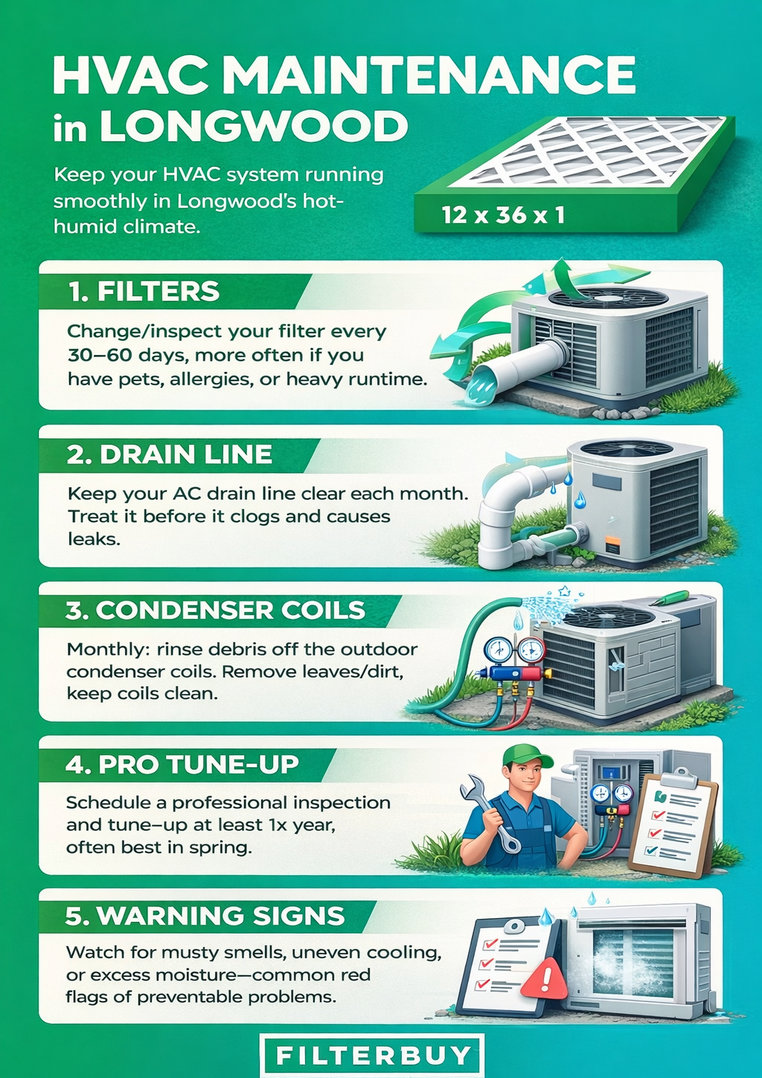
FAQ on “HVAC Maintenance in Longwood”
Q: How often do I need HVAC maintenance in Longwood?
A:
Pro maintenance: 1–2 times per year.
Between visits: change filters on schedule.
Longwood reality: humidity makes drain care + coil cleanliness more important.
Q: How do I tell a “real” maintenance visit from a cheap tune-up?
A: Look for these must-haves:
Airflow + temperature measurements (not just “looks good”)
Evaporator coil/blower inspection
Drain pan/line service (flush/clean-out)
Electrical checks (capacitor, contactor, controls)
If they can’t list this, it’s usually a quick inspection.
Q: Why does my home feel clammy even when the AC runs?
A: Most common causes I see:
Dirty evaporator coil (poor heat/moisture transfer)
Restricted airflow (filter/return/duct issues)
Drain system problems (partial clogs/backups)
Temperature can drop while comfort still feels wrong.
Q: What can I safely do myself?
A: High-impact, low-risk steps:
Replace the correct size filter and ensure it seals (no gaps).
Keep returns and vents open (airflow matters).
Check for water near the air handler/drain line.
Avoid DIY: coil chemicals, electrical work, refrigerant diagnostics.
Q: How do I choose a trustworthy HVAC maintenance provider in Longwood?
A: Prioritize:
Active Florida licensing
A written checklist of included tasks
Proof of work (photos, readings, documented findings)
Red flag: pricing that relies on surprise add-ons.
Learn more about HVAC Care from one of our HVAC solutions branches…
Filterbuy HVAC Solutions - Miami FL - Air Conditioning Service
1300 S Miami Ave Apt 4806 Miami FL 33130
(305) 306-5027
Filterbuy HVAC Solutions - Miami FL - Air Conditioning Service